
Low Back Pain
We assess factors that may contribute to low back pain and create personalized physiotherapy and exercise plans.
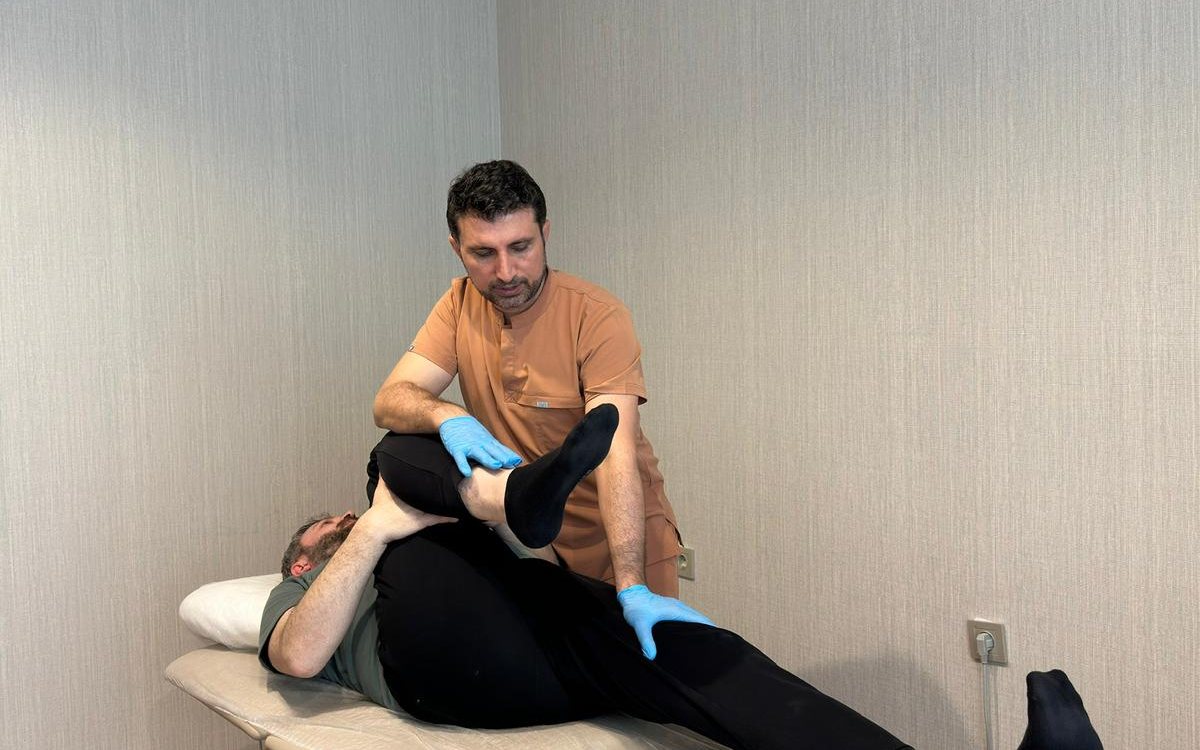
Osteopathic Physiotherapist Mustafa Kurt evaluates the mechanical factors contributing to lower back pain, creates exercise plans to address pain at its source, and offers personalized physiotherapy services.
What Causes Lower Back Pain? What Helps and How Does It Go Away?
Lower back pain is one of the common muscle and joint problems many people experience today. It can appear suddenly after lifting a heavy object, or it may develop gradually due to long hours at a desk, poor sitting habits, or a sedentary lifestyle.
While some lower back pain eases on its own within a few days, other cases can last long enough to affect daily life, work, and freedom of movement.
So what causes lower back pain? What helps relieve it? When should you seek support from a specialist? In this article, we will cover the most common causes of lower back pain, points to watch at home, and how physiotherapy and osteopathy approaches can support this process.
What Causes Lower Back Pain?
The lower back is an important region that carries the body's weight and plays an active role in nearly all our movements. Vertebrae, discs, muscles, connective tissues, and joints work together to enable movement.
Strain or imbalance in any of these structures can cause lower back pain.
The most common causes of lower back pain include:
Muscle and Connective Tissue Strain
Lifting heavy objects, making sudden twisting movements, or engaging in unfamiliar physical activity can strain the muscles around the lower back.
A significant portion of pain described as "sudden lower back stiffness" is related to strain in the muscles and surrounding tissues.
Lower Back Pain When Bending and Standing
During bending and standing—one of the movements we do frequently in daily life—excessive load can be placed on the lower back.
Using the knees as well as the back when picking something up from the floor can help reduce the load on the lower back.
Lumbar Disc Herniation
Changes in the structure of the discs between the vertebrae, or outward bulging, can put pressure on nerves.
In disc herniation, pain may not be felt only in the lower back. Symptoms such as pain spreading to the hip and leg, numbness, or tingling may also occur.
Poor Posture and Sedentary Lifestyle
Sitting for long periods, working at a computer in the wrong position, and not moving enough during the day can cause the tissues around the lower back to become more strained.
Lower back pain is one of the common complaints, especially among desk workers.
Other Causes of Lower Back Pain
Lower back pain is not always muscle-related. Problems in the spinal joints, sacroiliac joint issues, certain rheumatic conditions, or different health problems can also cause pain in the lower back.
Proper assessment is important for persistent, recurring, or progressively worsening lower back pain. In such cases, consulting a Physical Medicine and Rehabilitation (PM&R) specialist or a physiotherapist will be beneficial. You can book a free appointment through e-Government or MHRS (call 182) at the Physical Medicine and Rehabilitation department of public hospitals.
Why Is Lower Back Pain More Common in Women?
Lower back pain may be seen more frequently in women during certain periods.
Hormonal and physical changes in the body during menstruation, pregnancy, and after menopause can affect the lower back.
Especially during pregnancy, changing body weight and shifts in the center of gravity can create extra load on the lower back and hip region.
During these periods, appropriate exercises and manual therapy methods applied under specialist supervision can be supportive.
What Helps Lower Back Pain? What Can Be Done at Home?
For newly onset lower back pain not linked to a serious trauma, some simple measures can provide relief.
Heat and Cold Application
For some newly onset pain, cold application in the early period can help reduce sensitivity. In later days, heat application can support muscle relaxation.
However, the method of application may vary depending on the person's condition.
Not Staying Completely Inactive
When you have lower back pain, complete bed rest is not always the best approach.
Continuing daily activities as pain allows, taking controlled walks, and gradually returning to normal can contribute to the recovery process.
Walking and Appropriate Exercises
Regular walking can help maintain mobility around the lower back.
In the long term, exercise programs suited to the person's needs can support lower back health.
Adjusting Daily Habits
Not staying in the same position for long periods, organizing the work environment, and developing proper sitting and lifting habits help protect the lower back.
How Does Lower Back Pain Go Away? The Importance of Exercise
To prevent lower back pain from recurring, it is necessary to address not only pain relief but also the underlying causes.
Strengthening the muscles around the abdomen, lower back, and hips helps the spine work more evenly.
Appropriate exercises can improve movement quality and make daily activities easier. These exercises should be performed under the supervision of a physiotherapist or physical medicine doctor.
The Osteopathy Approach in Lower Back Pain
Osteopathy is one of the manual therapy approaches that evaluates the body as a whole.
In lower back pain, rather than looking only at the painful area, the person's posture, movements, joint mobility, and body balance are assessed together.
The aim of osteopathic assessment is to understand the mechanisms creating the pain and determine an appropriate approach for the person.
In suitable individuals, osteopathy can support improved movement quality and greater comfort in daily life when combined with physiotherapy and exercise approaches.
Who Can Osteopathy Be Applied To?
Osteopathic assessment can be planned appropriately for people in different age groups.
Different manual therapy techniques can be used according to the person's needs, from infants to adults.
During pregnancy, in older individuals, or in people with movement limitations, applications are planned more sensitively according to the person's condition.
Who Should Osteopathy Not Be Applied To?
In some cases, a doctor's assessment is required first.
Especially:
- Advanced osteoporosis
- Recently formed fractures
- Active infections
- Progressive neurological diseases
- Active tumor or cancer processes
osteopathy may not be appropriate in such situations. For this reason, an assessment by a physical medicine doctor or orthopedics specialist must be obtained.
What May Be Felt After Osteopathy?
After manual therapy, some people may experience mild muscle sensitivity, fatigue, or short-term different sensations.
This is usually a temporary response of the body to the application.
Session Duration and Fees
Osteopathy session durations may vary according to the person's needs and the assessment process.
At our clinic, sessions are generally planned for 45-60 minutes.
At the first visit, the person's complaint, posture, and movement characteristics are assessed and an appropriate roadmap is determined.
Session fees may vary depending on the program to be applied and personal needs. Exact fee information is determined after the initial assessment.
When Should You Seek Specialist Support?
Lower back pain often arises from simple causes, but some symptoms require more detailed assessment.
It is important to seek specialist support in the following situations:
- Pain spreading to the hip or leg
- Increasing numbness and tingling
- Loss of strength in the leg
- Changes in bladder or bowel control
- Severe pain that wakes you at night
- Lower back pain that begins after trauma
- Pain that persists for a long time or recurs frequently
If any of these symptoms are present, you should consult a Physical Medicine and Rehabilitation (PM&R) specialist, physiotherapist, or orthopedics specialist without delay. You can book a free appointment through e-Government or MHRS (call 182) at the Physical Medicine and Rehabilitation department of public hospitals, or receive this service at Osteopathic Physiotherapist Mustafa Kurt's clinic in Istanbul.
Important: Lower back pain is a common problem that can affect quality of life but can be managed with proper assessment. Muscle strain, poor posture, inactivity, disc herniation, and joint problems are among the frequent causes of lower back pain. Understanding the cause of pain correctly and determining an appropriate exercise and treatment approach is an important part of the process.
If your lower back pain is affecting your daily life or has persisted for a long time, a detailed assessment can be performed at our clinic and an approach suited to you can be determined.
Osteopathic Physiotherapist Mustafa Kurt
Address: Atatürk Mah. Ertuğrul Gazi Sok. Metropol İstanbul Sitesi B Blok Kat:2 D:67, Ataşehir / Istanbul
Phone: 0555 345 6585