
Herniated Disc
Physiotherapy approaches for pain management, movement education and functional support in lumbar and cervical herniated disc complaints.
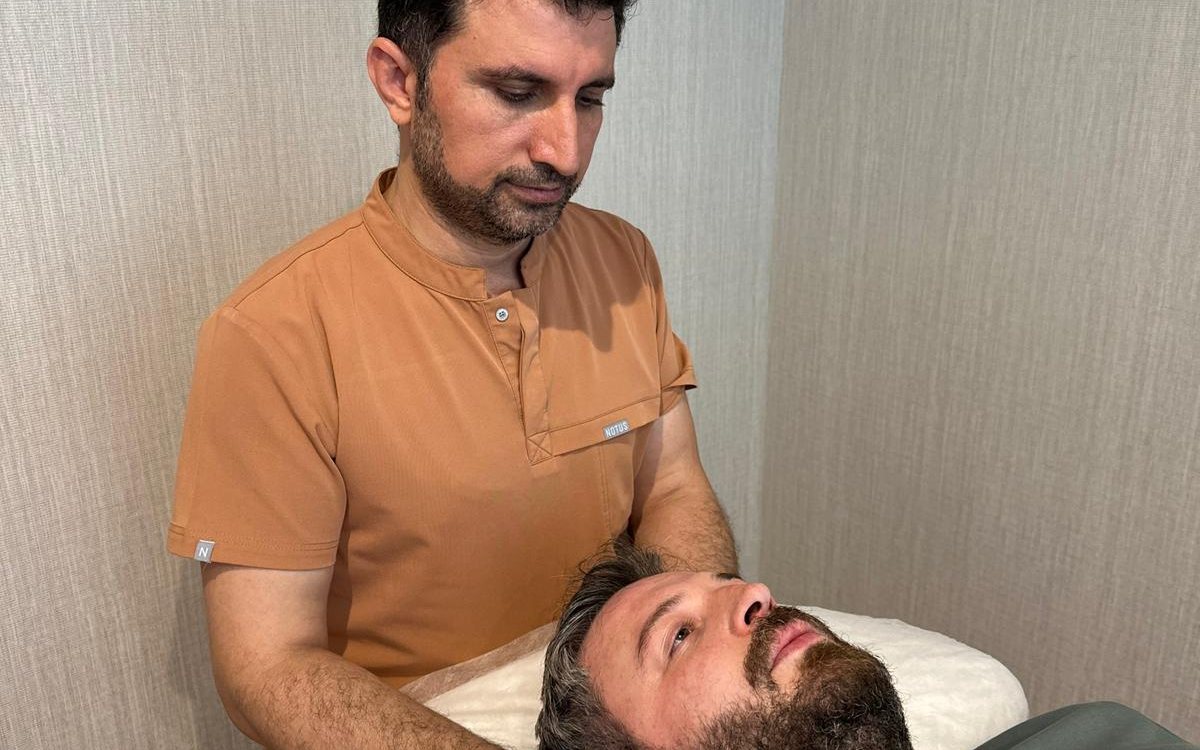
Osteopathic Physiotherapist Mustafa Kurt creates protective spinal exercise plans to relieve pressure on the spine in lumbar and cervical disc herniation, offering personalized physiotherapy with holistic approaches in Istanbul.
Lumbar and Cervical Disc Herniation: Symptoms, Causes, Treatment, and Fee Information
What Is Lumbar and Cervical Disc Herniation?
Lumbar and cervical disc herniation is a spinal problem that occurs when the structure of intervertebral discs between the vertebrae deteriorates and presses on nerve roots.
The disc structure consists of two parts:
Annulus fibrosus: Tough, protective outer layer
Nucleus pulposus: Gel-like inner structure
Over time or as a result of sudden strain, a tear may form in the outer layer. Protrusion of the inner material can press on nerve roots, leading to pain and neurological symptoms.
Why Does a Herniated Disc Occur?
Lumbar and cervical disc herniation usually develops over time. The main causes are age-related disc degeneration, incorrect lifting techniques, prolonged sedentary living, excess weight, postural disorders, and weak core muscles.
L4-L5 and L1-L2 Herniation (Lumbar Disc Herniation)
L4-L5 are vertebrae in the lower back and can cause pain extending to the hip, outer leg, and big toe. L1-L2 is in the upper lumbar region where the thoracic spine meets the lower back and causes pain in the upper hip and groin area. L4-L5, which bears more load, generally causes much more severe pain.
L1-L2 is located at a higher level where the thoracic and lumbar regions meet. Herniations in this area more often cause pain radiating to the upper hip and groin. This region is less mobile. Herniations here may cause localized back pain or weakness in the upper leg, but they generally do not lead to pain as severe or widespread as L4-L5 leg pain (sciatica).
L4-L5 Herniation: This is the most common site for lumbar disc herniation because it bears a large portion of body weight and is one of the most mobile segments. When a large herniation forms, it can press on sciatic nerve roots and cause very severe pain described as electric shock or a knife stabbing sensation.
Symptoms of Lumbar and Cervical Disc Herniation
Lumbar Disc Herniation Symptoms
- Pain radiating from the lower back to the hip and leg (sciatica)
- Numbness and tingling in the leg
- Pain that increases with prolonged sitting
- Weakness in leg muscles
- Reduced walking distance
Cervical Disc Herniation Symptoms
- Pain radiating from the neck to the shoulder and arm
- Numbness and tingling in the arm and hand
- Reduced grip strength
- Limited neck movement
- Headache in some cases
When Should You See a Doctor?
The following situations require urgent evaluation: loss of bladder or bowel control, rapidly increasing muscle weakness, foot drop, numbness in the groin and genital area, and severe pain that wakes you at night.
If any of these symptoms are present, consult a Neurosurgery or Physical Medicine and Rehabilitation (PM&R) specialist without delay. You can book a free appointment at these departments in public hospitals through e-Government or MHRS (call 182).
Treatment Methods for Lumbar and Cervical Disc Herniation
The treatment approach is generally stepwise and personalized.
1. Non-Surgical Treatment
Non-surgical treatment may include medication (pain and muscle spasm control), physical therapy applications, exercise programs, and manual therapy in suitable patients.
Note: Treatment effects may vary from patient to patient.
2. Interventional Methods
Epidural injections and nerve blocks may be applied in patients who do not respond to non-surgical treatments.
3. Surgical Treatment
Surgery is required only in limited cases: progressive muscle weakness, loss of bladder or bowel control, and severe, resistant pain.
Pain Management and Movement Education with Physiotherapy
In lumbar and cervical disc herniation treatment, physiotherapy is among the most effective methods for reducing pain, restoring mobility, and making daily activities easier.
Pain Management: Manual therapy, joint mobilization, and soft tissue techniques performed by the physiotherapist aim to reduce pressure on the nerve. At the same time, pain control is targeted through electrotherapy, hot-cold applications, and postural correction work.
Movement Education: Fear of movement and incorrect movement patterns after a herniation can negatively affect recovery. For this reason, correct movement habits are taught with physiotherapist guidance. The patient learns how to perform daily movements such as bending, lifting, and turning in a spine-friendly way.
Functional Support: Muscle imbalances are common in individuals with lumbar and cervical disc herniation. With personalized exercise programs prepared by the physiotherapist, weak muscles are strengthened and tight muscles are stretched. The goal is to strengthen the muscular corset around the spine, reduce load on the spine, and minimize the risk of recurrent herniation.
Protecting Spinal Health in Daily Life
Good Habits
Lifting loads with bent knees, keeping the screen at eye level, walking regularly, and strengthening core muscles are among good habits.
What to Avoid
Lifting heavy weights by bending from the waist, sitting motionless for long periods, constantly leaning forward while using a phone, and leaving muscles weak are behaviors to avoid.
Session Process and Treatment Plan
Lumbar and cervical disc herniation treatment is planned individually. Each patient's clinical condition, pain level, and functional loss differ. Which vertebrae the herniation is between is also important.
Treatment Process: It consists of initial assessment and examination, creating a personalized treatment plan, and clinical follow-up and evaluation with regular session applications.
Session Duration: Average 45–60 minutes.
Average Number of Sessions
In mild cases, 5–10 sessions may be sufficient. In moderate cases, 10–20 sessions may be planned. In advanced cases, longer-term follow-up is applied.
Fee Information
Fees for lumbar and cervical disc herniation treatment are not fixed because the treatment methods applied vary, the number of sessions is determined individually, and the severity of the condition differs. For this reason, pricing is generally done per session or as personalized treatment packages. Clear pricing is determined according to the treatment plan created after the initial assessment.
Frequently Asked Questions
Does lumbar disc herniation go away completely?
In many patients, symptoms can be brought under control, but the outcome varies from person to person.
Does cervical disc herniation require surgery?
The vast majority of patients are treated without surgery.
Is physical therapy a definitive solution?
Physical therapy can be effective in many patients, but results depend largely on the person's determination and how accurately they follow the physiotherapist's instructions.
Is exercise harmful?
Properly planned exercise is generally beneficial; incorrect exercise can be harmful. For this reason, it should always be done under the supervision of a physiotherapist or physical therapy physician.
Important: Lumbar and cervical disc herniation is a condition that can be brought under control in most patients with correct diagnosis and appropriate treatment. The goal of treatment is not only to reduce pain but also to preserve spinal function and prevent recurrence. Through pain management, movement education, and functional support with physiotherapy, patients can return to daily life more safely and comfortably.
Important Disclaimer: This content is for general informational purposes only and does not replace medical diagnosis or treatment. If you have symptoms, be sure to consult a Neurosurgery or Physical Medicine and Rehabilitation (PM&R) specialist.
Osteopathic Physiotherapist Mustafa Kurt
Address: Atatürk Mah. Ertuğrul Gazi Sok. Metropol İstanbul Sitesi B Blok Kat:2 D:67, Ataşehir / Istanbul
Phone: 0555 345 6585